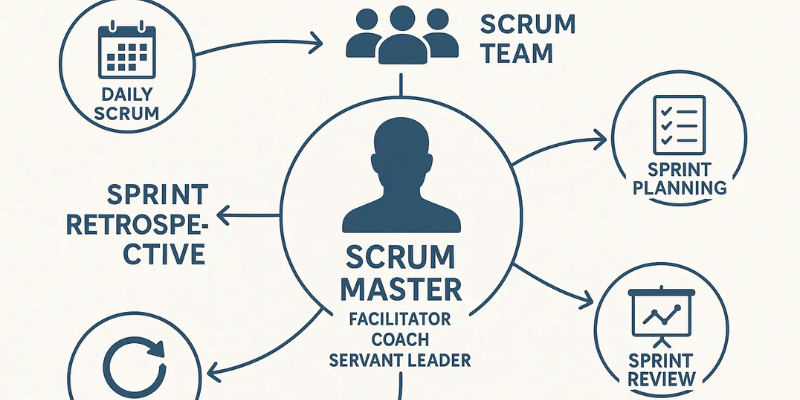
Modern Agile teams achieve success without relying on command-and-control leadership. They flourish instead when leaders concentrate on empowering individuals, eliminating barriers, and promoting teamwork. With this change, servant leadership has become a fundamental aspect of the Scrum Master role. Rather than being a conventional manager, a Scrum Master serves as a guide who assists teams in delivering value and fostering ongoing improvement. Scrum Masters foster environments of empowerment, support, and accountability through the adoption of servant leadership.
This mentality fosters transparency, trust, and adaptability essential components for Agile success. Organizations that recognize this role experience enhanced collaboration, swifter problem resolution, and improved morale. Scrum Masters who take on a servant-leader role prioritize the team, engage in active listening, and guide through influence instead of relying on authority. This blog examines the importance of servant leadership for high-performing Agile teams and how Scrum Masters can adopt it fully. Scrum drives Agile teams, products, and enterprises where collaboration, adaptability, and continuous improvement are critical worldwide. FITA Academy equips learners with industry-aligned Scrum Master skills, focusing on Agile principles, Scrum frameworks, servant leadership, sprint planning, backlog management, and team facilitation aligned with real-world project environments.
Understanding Servant Leadership in Scrum
The philosophy of servant leadership emphasizes the act of serving others before taking on the role of a leader. This encompasses fostering open dialogue, advocating for collective ownership, and cultivating a culture of ongoing enhancement. A servant leader pays close attention to team worries and replies with compassion and pragmatic answers.
Rather than concentrating on immediate outcomes, they prioritize the long-term health of the team. Scrum Masters cultivate trust and psychological safety through the demonstration of humility and respect. This approach to leadership enables team members to take the initiative and make decisions together. Effective performance and adaptability in teams central tenets of Agile principles thrive when they feel supported instead of controlled.
Core Responsibilities of a Scrum Master as a Servant-Leader
The duties of a Scrum Master go well beyond that of meeting facilitator. They serve as a coach, facilitator, and advocate for the Scrum team in their role as a servant-leader. A key aspect of their role is to make sure that Scrum practices are comprehended and adhered to properly. Additionally, they assist the Product Owner in backlog refinement and aid the team in providing high-quality increments. Another important duty is to eliminate barriers.
No matter if the impediment is of an organizational, technical, or interpersonal nature, the Scrum Master takes action in advance to fix it. Moreover, they shield the team from unwarranted interruptions and outside stressors. The Scrum Master facilitates the team’s focus on value delivery by concentrating on these responsibilities. This role exemplifies servant leadership by building trust and facilitating sustainable performance. A clear understanding of Agile practices and Scrum frameworks significantly improves team collaboration and project delivery. Scrum Master Certification in Chennai emphasizes hands-on Agile implementation, sprint planning, backlog refinement, servant leadership, and real-world project scenarios aligned with modern industry and enterprise requirements.
Empowering Scrum Teams Through Servant Leadership
At the heart of servant leadership is empowerment. Scrum Masters foster team empowerment through the promotion of self-organization and shared accountability. Rather than assigning tasks or making decisions for the team, they facilitate discussions that assist team members in discovering their own solutions. This method fosters confidence and ownership. Scrum Masters foster transparency by making sure that everyone can see the progress, challenges, and objectives.
Regular retrospectives create a secure environment for reflection and enhancement. The Scrum Master aids in individuals’ professional and personal development by providing ongoing feedback and support. Teams that are empowered show greater motivation, creativity, and resilience. They react more quickly to change and work together more efficiently. Scrum Masters can unleash the complete potential of Agile teamwork by catering to the team’s needs and placing faith in their abilities.
Coaching, Mentoring, and Removing Impediments
Scrum Masters provide coaching to teams on Agile principles, aiding their comprehension of both the methods and the significance of specific practices. They provide mentorship to individuals through guidance, posing thought-provoking questions, and fostering learning. Eliminating obstacles continues to be a daily priority. Such hurdles may consist of ambiguous requirements, technical debt, or failures in communication. Scrum Master Training Program at a B School in Chennai can significantly boost your career readiness and employability by strengthening Agile practices, Scrum framework knowledge, servant leadership, team facilitation, and effective project delivery skills.
These issues are dealt with quickly by a servant-leader, who works together with stakeholders to avert their reappearance. They concentrate on enhancing systems and processes rather than attributing blame to individuals. This encouraging method promotes a culture of ongoing enhancement. As time goes on, teams develop greater self-sufficiency and the ability to tackle challenges on their own, demonstrating the effectiveness of servant leadership.
Building Trust and Self-Organization in Scrum Teams
Successful Scrum teams are built on trust, which servant leadership is essential in developing. By demonstrating consistency, transparency, and supportiveness, Scrum Masters build trust. They foster a setting in which team members feel secure in sharing ideas, voicing worries, and acknowledging errors. Scrum Masters foster psychological safety by encouraging open dialogue. When trust is established, self-organization naturally follows.
Teams independently plan, execute, and deliver without depending on external guidance. This autonomy is backed by the Scrum Master through the guidance of discussions and reinforcement of Agile values. As time goes on, the team cultivates a robust sense of ownership and accountability. In this environment, which is characterized by trust, collaboration flourishes and the quality of results improves.
Challenges in Adopting a Servant-Leader Mindset
There are difficulties involved in adopting a mindset of servant leadership. In organizations that are used to hierarchy, many Scrum Masters find it difficult to abandon traditional leadership habits. There might be a push to behave like a manager or someone making decisions. Obstacles can also arise from resistance by stakeholders who misinterpret the role of the Scrum Master. Moreover, it takes skill and patience to balance support with accountability.
Servant-leaders should not become excessively passive or permissive. To surmount these challenges, one must engage in ongoing learning and reflection. Mentorship, training, and feedback are beneficial for Scrum Masters. They gradually shape organizational culture by maintaining a commitment to Agile principles and showing the benefits of servant leadership through outcomes. To succeed, one must be persistent and adaptable. It is important to know the difference between the scrum master and the agile coach.
Measuring the Impact of Servant Leadership in Scrum
Assessing the influence of servant leadership contributes to confirming its efficacy. Enhanced team morale, greater collaboration, and reliable value provision are significant signs. Successful servant leadership is also indicated by metrics like sprint predictability, enhancements in quality, and fewer impediments. Retrospective feedback offers important insights into the team’s satisfaction and development.
Although servant leadership does not always yield immediate results, its long-term advantages are considerable. Teams develop higher levels of engagement, resilience, and capacity for ongoing enhancement. Scrum Masters foster sustainable Agile environments by prioritizing individuals and processes over control. The results show that servant leadership goes beyond being merely a philosophy; it is a practical and effective way to lead Scrum teams.
Leading by Serving in Scrum
When the Scrum Master is accepted in the role of servant-leader, it changes teams’ methods of working and succeeding. Scrum Masters foster environments of trust, empowerment, and collaboration by putting service above authority. This style of leadership is in perfect accordance with Agile values and fosters continuous improvement. Despite the presence of challenges, the advantages in the long run are much greater than the difficulties.
Teams under the guidance of servant-leaders demonstrate greater engagement, adaptability, and effectiveness. This role entails a dedication to self-improvement, compassion, and forbearance on the part of Scrum Masters. Their service-oriented leadership helps teams realize their full potential and consistently provide meaningful value. Not only is servant leadership the essence of Scrum, it also leads to Agile excellence.